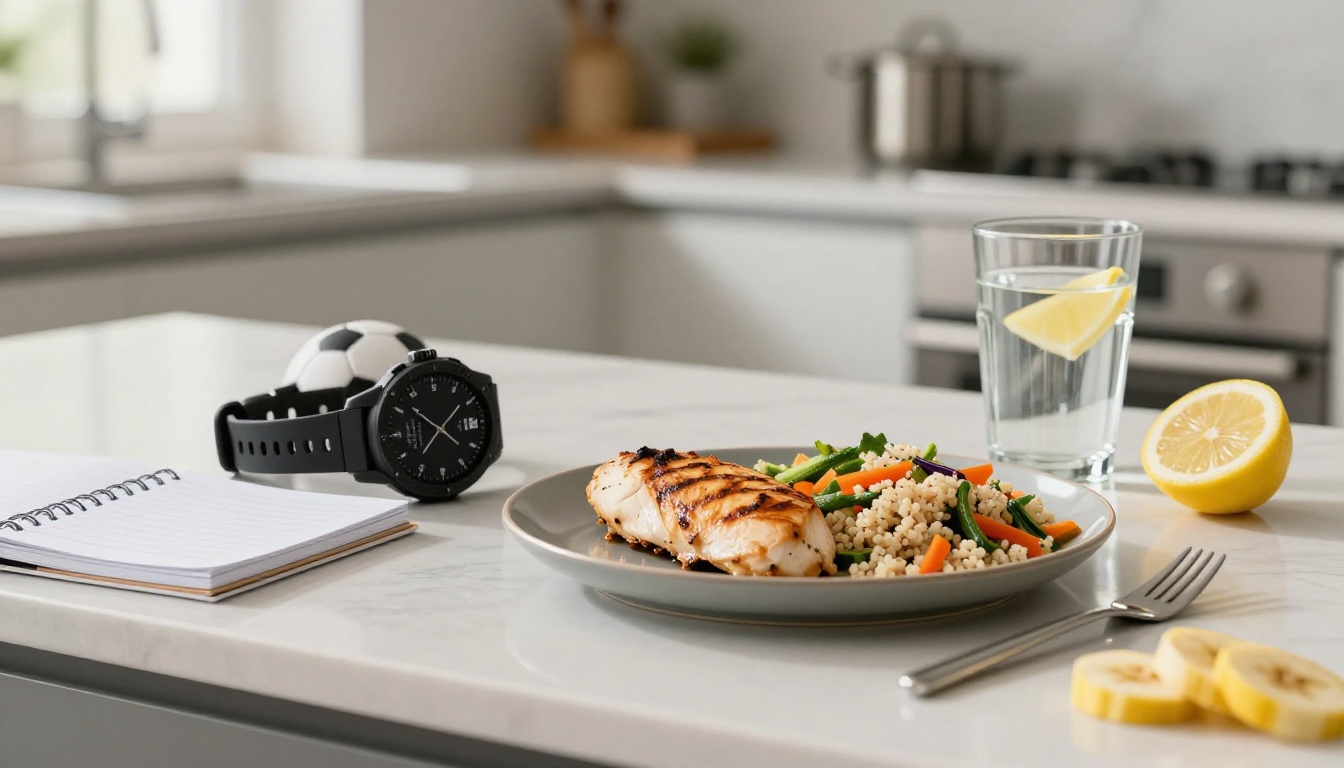
Picture this: Mark, a weekend soccer player in his 40s, used to drag through games. His legs felt heavy by halftime, and soreness lingered for days. Then he tried a simple sports nutrition plan. Energy surged, recovery sped up, and he played full matches without fading.
You might face the same issues. Workouts leave you wiped out. Muscles ache longer than they should. Fatigue hits hard, and injuries lurk around the corner. Proper sports nutrition basics change that. It fuels your sessions, repairs tissues faster, fights tiredness, and keeps you safe. Best part? No complex diets or pricey supplements needed.
That’s why this guide helps you build your own athlete meal plan. Even if you’re a beginner, you’ll follow these steps easily. First, assess your needs based on your sport and goals. Next, focus on key nutrients like carbs, proteins, and fats. Then, build meals that fit your day. You’ll get easy recipes too. Finally, learn tracking tips to stay on course.
So, grab a notebook, and let’s create your simple sports nutrition plan today. Before you start, chat with your doctor, especially if health issues are in play. They’ll ensure it fits you perfectly. Ready to feel stronger on the field?
Figure Out Your Personal Nutrition Needs First
You can’t build a solid sports nutrition plan without knowing your starting point. First, assess your sports nutrition needs based on your sport, training, and life. Factors like endurance running versus weightlifting, your weekly workout hours, body weight, age, and gender all play a role. For example, a 30-year-old male cyclist training 10 hours a week burns more calories than a 50-year-old female golfer practicing twice weekly.
Start with a quick self-check. Grab a pen and answer these:
- What sport do you play? (Endurance like swimming, power like sprinting, or team like basketball?)
- How many hours do you train each week?
- What’s your current body weight?
- Your age and gender?
- Do you feel hungry often, low on energy, or sore after workouts?
Next, log your eating habits for one week. Jot down every meal, snack, and drink. Spot gaps fast, such as skipped breakfasts or too few veggies. This baseline shows what to tweak. Common goals include losing fat, gaining muscle, or just maintaining energy. Pick one to guide your plan.
To estimate daily calories, use free tools from trusted sources. Try the NIH Body Weight Planner for personalized estimates based on activity. Or check the Mayo Clinic calorie needs calculator. Input your details, and get a starting number. Adjust as you go by listening to your body. Hunger means eat more; steady energy means you’re on track.
Match Your Plan to Your Sport and Schedule
Your sport dictates fuel priorities. Runners need high carbs for long efforts. Bodybuilders focus on protein for muscle repair. Cyclists blend both for sustained power. Training intensity matters too. Light sessions call for basic meals. Moderate ones need balanced macros. Intense days demand extra carbs and calories.
Timing shifts things. Morning workouts? Fuel with oats and fruit beforehand. Evening sessions? Opt for lighter dinners to avoid sluggishness. Shift workers face tricks. Prep grab-and-go meals. Eat carbs before night shifts; proteins after to recover while sleeping.
Busy schedules demand smart tweaks. Batch-cook on off days. Pack shakes for travel. Here’s a quick comparison of needs for popular sports. Use it to match your plan.
| Sport | Primary Energy Need | Carbs (g/kg body weight) | Protein (g/kg) | Fat (%) | Key Timing Tip |
|---|---|---|---|---|---|
| Soccer | Explosive bursts + endurance | 8-12 | 1.6-2.2 | 20-30 | Carbs 3-4 hours pre-game |
| Basketball | Quick sprints + jumps | 7-10 | 1.7-2.0 | 25-30 | Protein snack post-practice |
| Cycling | Steady aerobic output | 10-12 | 1.5-1.8 | 20-25 | Hydrate + carbs every hour ride |
This table highlights differences. Soccer players carb-load for matches because games mix speed and stamina. Basketball athletes prioritize recovery proteins after jumps wear muscles. Cyclists stack carbs for hours in the saddle. Adjust portions to your weight. A 70kg soccer player might aim for 560-840g carbs daily on heavy days.
For irregular schedules, prioritize consistency. Night-shift nurses? Shift heavy meals to wake-up times. Parents with kids’ practices? Keep portable options like nuts and yogurt ready. Test changes over two weeks. Energy levels will tell if it fits.
Set Clear Goals with Realistic Targets
Goals keep your plan focused. Use SMART: Specific, Measurable, Achievable, Relevant, Time-bound. Vague ideas like “eat better” fail. Instead, say “hit 1.6g protein per kg body weight daily for four weeks.” A 80kg lifter targets 128g protein. Track it in an app.
Athletes thrive on balanced macros. Aim for 50-65% carbs from grains and fruits for energy. Get 20-30% protein from eggs, chicken, or beans for repair. Fill the rest with 20-30% fats from avocados and nuts for hormones. These splits support most sports. Endurance folks lean higher carbs; strength athletes bump protein.
Calculate yours easily. Start with total calories from your self-check. Divide by macros. For 3000 calories: 55% carbs = 412g (1650 cal). Tools simplify this. Plug numbers into the ACE Fitness macro calculator for instant results. Or use MyFitnessPal’s macro tool after setting goals.
Avoid extremes. Zero-carb diets tank workouts because muscles crave glycogen. All-protein plans ignore fats needed for joints. Balance prevents burnout. If gaining muscle, add 300-500 calories surplus. Losing weight? Cut 300-500 deficit. Maintain? Match intake to burn.
Review weekly. Hit targets? Great. Miss them? Adjust portions. A swimmer aiming for race weight lost 10 pounds by capping carbs at 55% and logging daily. You can too. Stay patient; changes build over time.
Load Up on the Right Nutrients to Power Your Performance
Your sports nutrition plan starts with the right fuel. Think of your body as an engine. It needs key nutrients for sports nutrition to run strong. Carbs give quick energy from grains and fruits. Proteins repair muscles from eggs, chicken, or beans. Healthy fats build endurance from nuts and avocados. Veggies pack vitamins and minerals. For a 70kg athlete, aim for 300-400g carbs daily on training days. Get 110-150g protein. Add 70-90g fats. These targets match your needs from earlier steps. They prevent crashes and speed recovery. Don’t skip them. Real foods beat supplements every time.
Many athletes fear carbs. They think carbs make you fat. That’s a myth for active people. Your body burns carbs fast during workouts. Extra ones refill muscle stores, not fat rolls. Studies show trained athletes handle high carbs well. So load up before sessions. You’ll feel the difference.
Carbs and Proteins: Your Energy and Repair Duo
Carbs power your moves. They break down into glucose for instant fuel. Choose oats, brown rice, sweet potatoes, bananas, or berries. Your fist equals one carb serving, about 30-45g. Eat that pre-workout. It tops glycogen without bloating.
Timing matters most. Two to three hours before exercise, grab fist-sized oats with fruit. You’ll sustain energy through soccer drills or lifts. During long sessions over 90 minutes, snack on another fist every hour. Bananas work great on the go.
Proteins fix what training breaks. They rebuild muscle fibers after stress. Top picks include eggs, grilled chicken, turkey, fish, Greek yogurt, or lentils. Your palm sizes one serving, roughly 20-30g.
Post-workout shines for protein. Eat within 30-60 minutes. A palm of chicken with quinoa hits both macros. It kickstarts repair so soreness fades faster. For a 70kg athlete, spread 140g protein over meals. Breakfast eggs, lunch turkey wrap, dinner salmon, snack yogurt. Simple swaps build habits.
Here’s how portions look in action:

That visual keeps servings easy. No scales needed. Test it next workout. Energy stays steady, muscles recover quick.
Fats, Hydration, and Everyday Essentials
Fats get overlooked. Yet they support long efforts and hormone health. Focus on omega-3s from salmon, walnuts, chia seeds, or flax. Your thumb matches one fat serving, about 10g. Add to meals for steady power. Avocados slice perfect on toast.
Don’t fear fats. They curb inflammation after hard days. A 70kg athlete needs 70g daily. Spread them: breakfast chia pudding, lunch salmon salad, snack nuts. You’ll notice joints feel smoother.
Hydration keeps everything flowing. Start with half your body weight in ounces. A 70kg (154lb) person drinks 77 ounces, or about 3 liters base. Add 16-32 ounces per sweat hour. Heavy sweaters lose salt too. Sip electrolyte drinks or add pinch of sea salt to water. Aim 3-4 liters total daily. Thirst lags behind need, so drink early.
Micronutrients fill gaps. Vitamins and minerals from colorful plates prevent cramps. Red peppers for vitamin C. Spinach for iron. Oranges for potassium. Half your plate veggies and fruits each meal. They boost immunity and energy without pills.
Check the USDA FoodData Central database for exact nutrition in foods. Search “salmon” or “quinoa.” It lists omega-3s, carbs, everything precise.

Build plates like that daily. You’ll hit targets naturally. Energy rises, performance climbs. Track one week. Adjust based on feel. Your body thanks you.
Craft a Daily Meal Plan That Sticks
You have your calorie needs and macro targets set. Next, turn them into a daily sports nutrition plan template that fits your life. Build around three main meals plus two or three snacks. Time them to match workouts, so you fuel up right and recover fast. This setup keeps energy steady, curbs hunger, and builds habits that last. Focus on whole foods you enjoy. Swap in favorites to dodge boredom. A beginner runner might hit 2200 calories with extra carbs. A gym enthusiast could reach 2800 with more protein. Adjust portions based on your math from earlier. Track for a week, then tweak. You’ll stick with it because it feels good, not forced.
Time Your Meals Around Workouts for Max Results
Workouts demand smart timing. Eat a carb-rich snack one to two hours before to top off energy stores. Your muscles grab glucose fast, so you push harder without crashing. After, refuel within 30 minutes. Proteins and carbs team up to repair tissues and restore glycogen. Skip this window, and recovery drags.
Start pre-workout simple. Grab a banana with peanut butter. One medium banana packs 27g carbs. Two tablespoons of peanut butter add 8g protein and healthy fats. Total around 250 calories. It digests quick, no gut issues mid-session. Runners love it for morning jogs. Cyclists pack it for rides.
Post-workout, blend a smoothie with yogurt, berries, and spinach. Mix 1 cup Greek yogurt (20g protein), 1 cup berries (15g carbs), a handful spinach, and water. About 300 calories. Yogurt repairs muscles. Berries fight soreness with antioxidants. Spinach sneaks in iron. Drink it fast after lifting or swimming.
On non-training days, shift focus. Drop pre-snack carbs. Add an extra protein snack instead, like cottage cheese with tomatoes. Keep total calories steady to match lower burn. Hydrate all day too. Morning workout? Breakfast hits right after. Evening one? Light dinner follows. Your body adapts quick. Test it three days. Feel the lift in performance.
Here’s a basic timing guide to print and pin up:
| Workout Time | Pre (1-2 hrs before) | Post (within 30 min) | Non-Training Swap |
|---|---|---|---|
| Morning | Banana + PB | Yogurt smoothie | Eggs + veggies |
| Afternoon | Apple + nuts | Turkey roll-up | Greek yogurt |
| Evening | Sweet potato | Chocolate milk | Cheese + fruit |
Use this as your daily sports nutrition plan template starter. It prevents energy dips. Athletes who time meals right cut fatigue by half.

Sample One-Day Plans for Common Sports
Samples make planning easy. Pick one close to your sport, then customize calories. Aim 2000-3000 based on needs. Beginner runner? Lean carbs for steady pace. Gym enthusiast? Boost protein for gains. Structure three meals, two to three snacks. Time for workouts. Include vegetarian or vegan swaps. Rotate foods weekly for fun and nutrients. Enjoy flavors, so you stay consistent.
Beginner Runner (2200 calories, moderate 45-min run mid-morning): Carbs fuel miles. Total: 55% carbs (300g), 25% protein (140g), 20% fat (50g).
- Breakfast (pre-run, 7 AM, 500 cal): Oats with banana, almond butter, cinnamon. (Vegan: use plant milk.)
- Post-run snack (9 AM, 300 cal): Smoothie with yogurt, berries, spinach.
- Lunch (noon, 600 cal): Turkey wrap with whole grain tortilla, veggies, hummus. (Veg: tofu wrap; vegan: lentil wrap.)
- Afternoon snack (3 PM, 250 cal): Apple with cheese stick. (Vegan: nuts.)
- Dinner (7 PM, 550 cal): Grilled chicken, quinoa, broccoli, olive oil. (Veg: eggs; vegan: tempeh.)
This keeps legs fresh. Runner Sarah dropped her 5K time by 2 minutes in a month.
Gym Enthusiast/Weightlifter (2800 calories, afternoon lifts): Protein rebuilds. Total: 45% carbs (320g), 30% protein (210g), 25% fat (75g).
- Breakfast (8 AM, 600 cal): Eggs scrambled with spinach, whole grain toast, avocado.
- Mid-morning snack (10:30 AM, 300 cal): Greek yogurt with nuts.
- Pre-lift snack (1 PM, 400 cal): Banana with peanut butter.
- Post-lift (4 PM, 500 cal): Salmon or tuna salad with sweet potato, greens. (Veg: eggs; vegan: chickpeas.)
- Dinner (8 PM, 700 cal): Steak, brown rice, asparagus. (Veg: paneer; vegan: black beans.)
- Evening snack if needed (400 cal): Cottage cheese with berries. (Vegan: soy yogurt.)
Lifter Mike gained 5 pounds of muscle in eight weeks. Portions scale up for higher calories.
Print this daily sports nutrition plan template below. Fill in your swaps. Check Academy of Nutrition and Dietetics sports samples for more ideas.
| Meal/Snack | Runner (2200 cal) Example | Lifter (2800 cal) Example | Your Custom |
|---|---|---|---|
| Breakfast | Oats + banana | Eggs + toast | |
| Snack 1 | Yogurt smoothie | Yogurt + nuts | |
| Lunch | Turkey wrap | (Adjust for lifts) | |
| Snack 2 | Apple + cheese | Banana + PB | |
| Dinner | Chicken + quinoa | Salmon + rice | |
| Snack 3 | – | Cottage cheese |
Variety fights burnout. Swap turkey for tempeh one day. Add spices. Track in an app. Adjust if hungry. Balance macros, hit calories, enjoy meals. Your plan sticks because it works for you. Performance climbs as a result.
Whip Up Quick Recipes and Build Your Grocery List
Quick easy sports nutrition recipes keep your plan simple and doable. You need meals that prep fast, under 20 minutes most days, so training stays first. These use whole foods like oats, eggs, and veggies. They hit carbs for energy, proteins for repair, and fats for staying power. Plus, they cost little because staples last weeks. Batch cook on Sundays. Add herbs or spices for fun flavors, like cumin in soups or cinnamon in oats. You’ll love how they fuel soccer games or gym sets without hassle. Here are 10 no-fuss picks. Each serves one; scale up as needed. Palm-sized protein, fist carbs, thumb fats guide portions.
Breakfasts and Snacks That Fuel You Fast
Start strong with these grabs. They digest quick, so you hit the field ready.
Greek yogurt parfait takes 5 minutes. Layer 1 cup plain Greek yogurt, a handful berries, and 1/4 cup oats. Top with cinnamon. Gets 25g protein, 30g carbs. Berries fight soreness after runs.
Slice an apple and spread 2 tablespoons almond butter. Ready in 2 minutes. Pairs 25g carbs from apple with 7g protein and fats. Perfect pre-workout snack; keeps hunger away till lunch.
Bake veggie egg muffins ahead. Whisk 6 eggs, chop spinach, peppers, and onions. Pour into muffin tin. Bake 15 minutes at 350°F. Makes 12; grab two for 20g protein. Freeze extras.
Mix overnight oats the night before. Stir 1/2 cup oats, 1 cup milk (or plant-based), banana slices, and chia seeds in a jar. Fridge overnight. Morning fuel: 40g carbs, 10g protein. Add vanilla for taste.
Roll protein balls in 10 minutes. Blend 1 cup oats, 1/2 cup peanut butter, 1 scoop protein powder (optional), and dark chocolate chips. Form balls; chill. Two balls give 15g protein. Snack post-lift.

These power mornings. Batch muffins and oats Sunday. You’ll save time all week.
Lunches and Dinners Ready in a Flash
Lunch or dinner? These cook fast, clean up easy. Focus on one-pan wonders.
Toss quinoa salad in 15 minutes. Cook 1/2 cup quinoa (boil 10 min). Mix with cucumber, tomatoes, feta, lemon juice, olive oil. Fist quinoa, palm feta: 25g protein, 40g carbs. Light for afternoon practice.
Grill fish tacos under 15 minutes. Heat tortillas. Pan-sear tilapia (season with lime, chili powder) 5 minutes. Add cabbage slaw. Two tacos: 30g protein, 30g carbs. Omega-3s help joints.
Simmer lentil soup in 20 minutes. Sauté onion, garlic, carrots. Add 1 cup lentils, broth, cumin. Boil till soft. Palm lentils: 20g protein, high fiber. Fills you for evening games.
Stir-fry chicken quick. Dice chicken breast, broccoli, bell peppers. Sauté with soy sauce, ginger 10 minutes. Serve over rice. Palm chicken: 35g protein. Ginger boosts recovery.
Wrap turkey lettuce boats fast. Fill romaine leaves with turkey slices, avocado, mustard. No cook time. Thumb avocado fats: 25g protein. Low-carb swap if cutting weight.

Flavor boost? Try paprika on chicken or basil in salads. Rotate weekly to stay excited.
Stock your kitchen with this weekly grocery list for seven days. Serves one athlete; double for families. Buy staples like oats, eggs, nuts once a month.
Produce (fresh weekly): Apples (4), bananas (6), berries (2 pints), spinach (bag), broccoli (2 heads), peppers (4), cucumbers (2), tomatoes (4), onions (3), lemons (3), cabbage (half head), carrots (bunch), romaine (head), garlic.
Proteins: Eggs (dozen), Greek yogurt (32 oz), chicken breast (2 lbs), tilapia or canned tuna (1 lb), lentils (dry 1 lb), turkey slices (8 oz), feta (4 oz).
Grains and staples: Oats (bag), quinoa (1 lb), brown rice (bag), tortillas (pack), peanut/almond butter (jar), chia seeds (small bag), dark chocolate chips (small).
Prep hacks: Chop veggies Sunday. Portion proteins in bags. These keep meals under 20 minutes. Total cost around $50-60. Check EatRight.org quick athlete recipes for swaps.
Your plan clicks now. Cook once, eat all week. Energy stays high.
Track Your Progress and Fine-Tune for Long-Term Wins
Your sports nutrition plan works best when you track it closely. Logging meals shows patterns fast. You spot wins like steady energy during runs. You catch issues too, such as low carbs causing fatigue. Start simple with a free app. Check progress weekly. Then adjust every two weeks. This method builds long-term habits that boost performance. You’ll stick with it because results motivate you.
Pick a Free App to Log Your Sports Nutrition Plan
Apps make tracking easy. They scan barcodes, calculate macros, and graph trends. Download MyFitnessPal or Cronometer today. Both offer free versions packed with tools for athletes.
MyFitnessPal shines for beginners. You log foods quick by searching or scanning. It tracks calories, carbs, proteins, and fats against your goals. Set reminders for meals. See weekly reports on hydration too. Millions use it for sports plans. Download from their official site.
Cronometer goes deeper on nutrients. It logs vitamins, minerals, and electrolytes precise. Great if you sweat heavy during soccer. Free version covers macros plus 80+ micros. Custom goals fit your sport. Check their app page for details.
Pick one. Spend five minutes daily entering meals. Add notes like “felt strong post-oats.” Data builds fast.
Monitor Energy, Performance, Weight, and Sleep Closely
Track key signs your plan fits. Jot them in your app or notebook weekly.
First, rate energy on a 1-10 scale daily. High scores mean good fuel. Low ones signal more carbs needed.
Next, note performance. Did lifts increase? Runs feel easier? Log personal bests.
Weigh yourself weekly, same time. Steady weight shows balance. Gains or drops guide tweaks.
Sleep matters too. Aim for 7-9 hours. Poor rest often ties to low calories or skipped proteins.
For example, a lifter logs: “Week 1: Energy 7/10, bench up 10lbs, weight stable, slept 8hrs.” Patterns emerge quick.

Review Sundays. Celebrate ups. Plan fixes for downs.
Adjust Every Two Weeks Based on Real Results
Data drives changes. Every 14 days, review logs. Tweak smart.
Tired mid-workout? Add 50g carbs daily, like extra rice. Energy rebounds.
Gaining too slow? Bump calories 200-300 with nuts or shakes. Muscles respond.
Weight creeps up unwanted? Cut 200 calories, focus veggies over snacks.
Soreness lingers? Up proteins to 2g per kg. Eggs or yogurt help.
A runner added bananas pre-run after logs showed fatigue. Her 10K time dropped three minutes.
Test one change at a time. Log two more weeks. Results confirm it.
Sidestep Common Pitfalls That Derail Plans
Athletes trip on simple errors. Undereating hits hardest. You skip snacks, energy tanks. Always hit calorie minimums.
Another trap: few veggies. They provide micros for recovery. Fill half plates with colors.
Forget hydration? Logs catch dry mouth entries. Add ounces till urine runs pale.
Over-logging stresses too. Keep it five minutes max. Focus macros first, details later.
Stay Motivated and Know When to Seek Pro Help
Progress photos spark fire. Snap weekly in workout gear. See muscle definition grow.
Grab a buddy. Share logs, compare runs. Accountability doubles stick rate.
Plateau after months? Consult a registered dietitian (RD) or sports coach. They spot blind spots. Find one via EatRight.org directory.
You’ve built a solid plan. Track it, tweak it, win big. Your next personal best waits. Keep going.
Conclusion
You now know the steps to build your own simple sports nutrition plan. First, assess your needs and goals. Then, load up on carbs, proteins, fats, and hydration. Next, craft daily meals and quick recipes around workouts. Finally, track progress and tweak as you go. These basics fuel better performance without fuss.
Picture Mark again. He transformed from halftime fade to full-game energy. You can too. Steady fuel cuts soreness, boosts stamina, and sharpens focus on the field or in the gym. Results build fast when you stick to the plan.
Simplicity beats perfection every time. Start today with one change, like timing a post-workout snack. Your body adapts, and wins stack up.
Share your custom plan in the comments below. Grab the daily template from earlier sections and test it this week. Subscribe for more tips on athlete meal plans.
What about supplements? Focus on food first; real meals deliver most nutrients. Add them only if a doctor suggests.
Ready for your breakthrough? Your next strong session starts with this plan. Go fuel up.